


By Kailey Burton
Imagine yourself in the mountains, snowshoeing through quiet, deep, drifts as big flakes swirl around. Sounds peaceful, right?
Now imagine you’re carrying a chainsaw and about 60 pounds of tools on your back. It’s 4 a.m., and it’s 10 below. There is no trail, and you’ve already worked a 14-hour day. You can’t stop yet though; people are counting on you to keep searching through the dark to find and fix a downed power line.
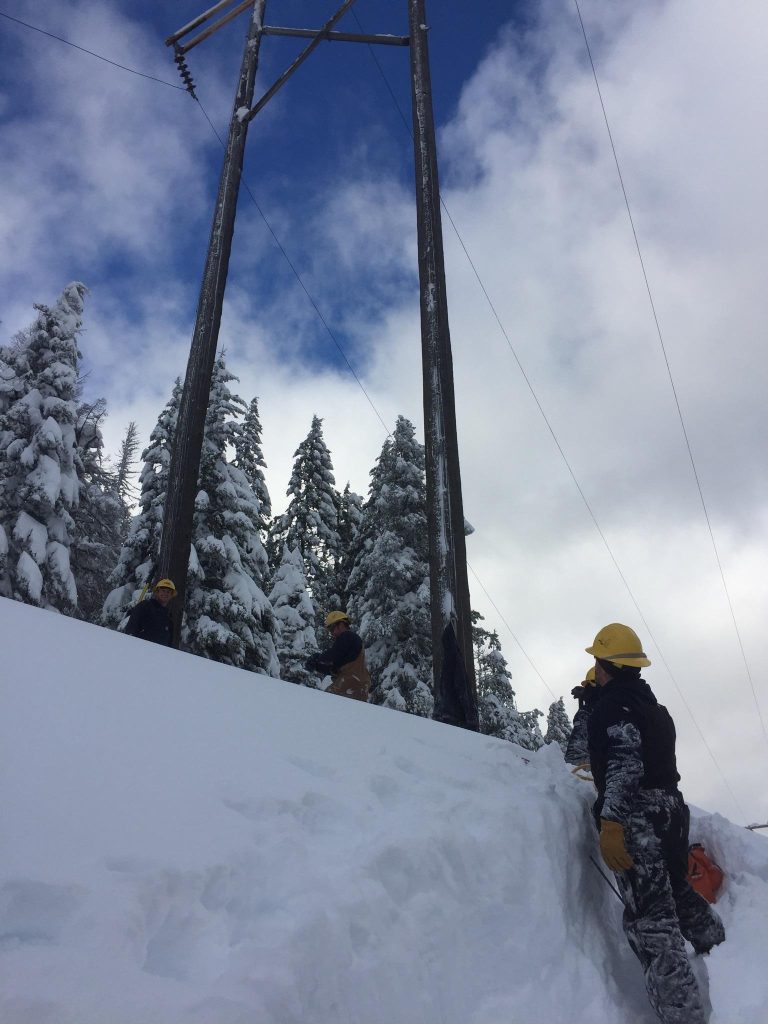
Welcome to winter in McCall—and to a day in the life of an Idaho Power lineman.
A lineman’s work can be deeply rewarding, but it’s also one of the most dangerous jobs in the industry. It takes thousands of hours of training to earn the title, and in Valley County, it requires even more: specialized skills, grit, and a stubborn creativity to face the challenging terrain.
The Challenge of Access
“A lot of our line becomes remote in the winter because the roads aren’t plowed anymore,” says Brian Newman, a lineman of 20 years. “West Mountain Road, for instance—you can drive up to it in the summer, but not in the winter.”
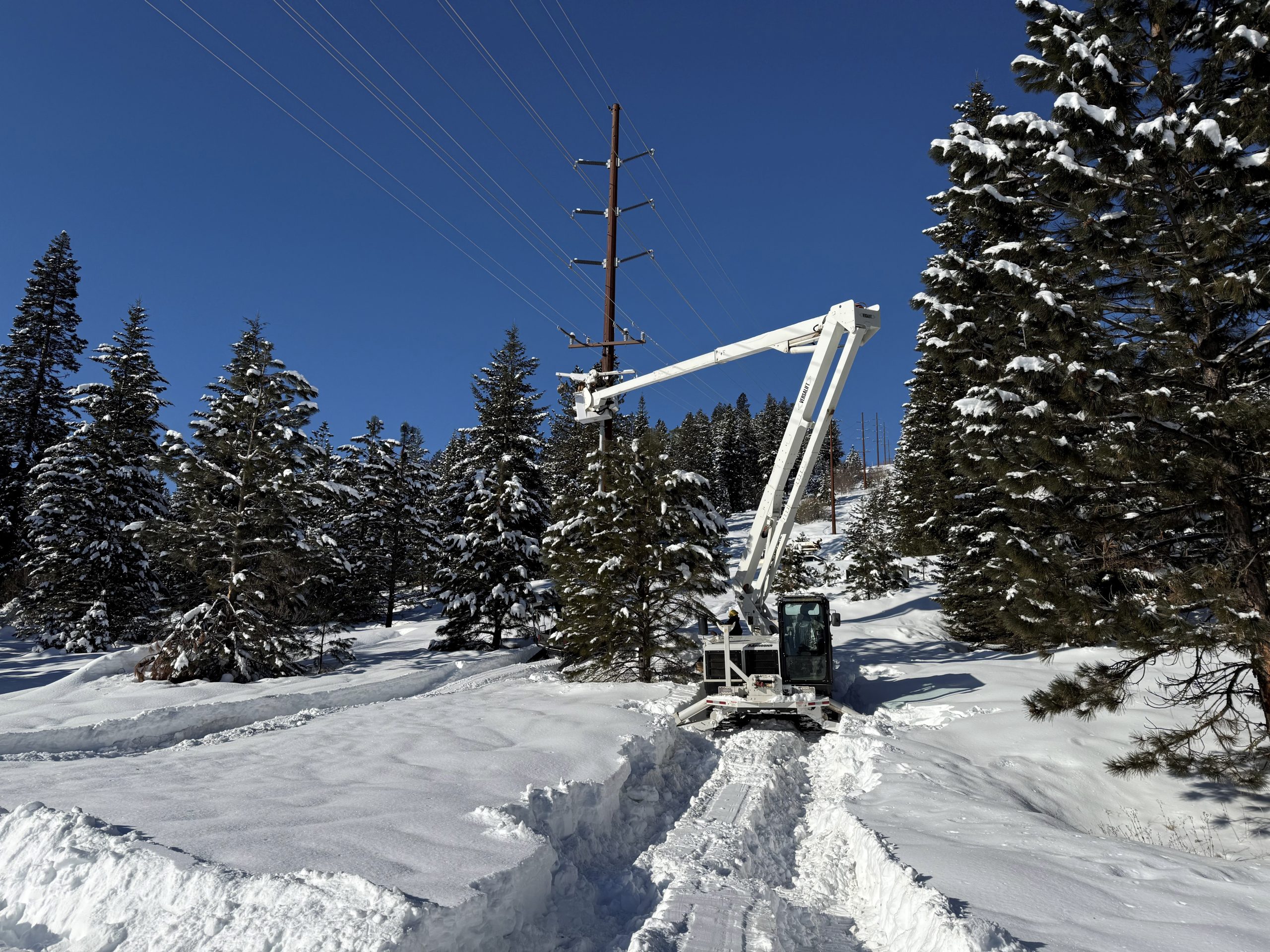
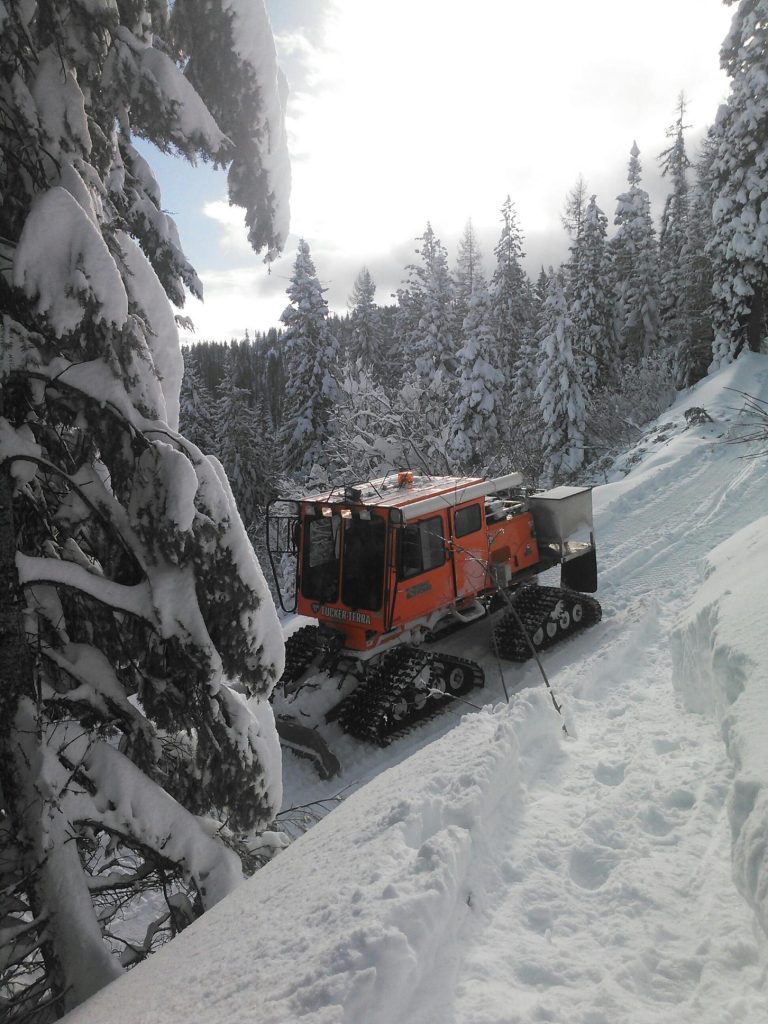
In areas like Brundage, when a tree falls on a line, the problem may be miles away from any road. “We can’t get to it with our trucks,” says 10-year Lineman Stephen Darcy, “We’re taking snowmobiles and snowcats to get in then snowshoeing in with our gear.”
“A lot of the patrolling we do is on foot. So snowshoeing,” says Jessie Van Patten, a 23-year Lineman.
“We’re climbing and rigging poles to get the wire back up there. So, just for our climbing gear and a hammer alone, that’s 50 pounds at least,” adds Newman.
Ingenuity in the Snow
Out here, every job is a puzzle. Restoring power in deep snow and dense forest means using equipment suited for the terrain. Darcy explains:
“At first it’s just you on the scene (to assess). Then you might call in snowmobiles, and a snowcat. The snowcat brings in the heavy gear… Whether that’s a new cross arm, or additional wire, a lot of tools. We can also use the snowcat as a winch, by rigging a pulley system and backing the snowcat to pull up the line,” says Darcy.
They can also pinpoint locations from the sky. “We use helicopters to patrol, especially on the line that runs up to Warm Lake. If the weather cooperates, it can save us a lot of walking,” says Van Patten.
Once the problem is spotted from the air, the crew still has to reach it on land. “Some of these access roads aren’t even maintained in summer,” Van Patten says. “A lot of times we’re side-hilling it in there. Packing chainsaws to cut yourself a path.”
Avalanches, Heavy Loads and Hidden Dangers
Anyone working in deep snow on the mountain can’t forget this silent threat: An avalanche.
“Avalanche awareness, training and safety is big,” says Darcy, “We have the training to identify when we’re in an area that has that potential…We wear avalanche transceivers, have all the probes, shovels, avalanche airbags. We go up and do training every year to maintain our knowledge and awareness.”
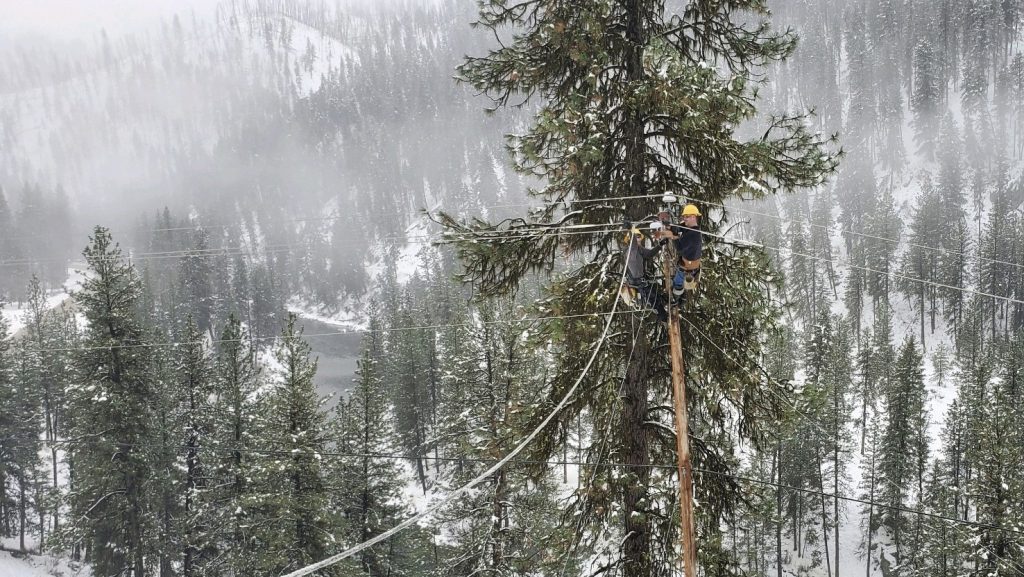
Line Crew Foreman Eric Loper, who’s been with Idaho Power for nearly three decades, points to another less obvious danger—tension in fallen trees and wires. “There’s a lot of unknown tensions when you’re cutting trees off lines. I’ve seen 500lb pieces of wood slingshot 60 feet in the air. So you’ve really got to pay attention when you’re around that. Cause if you’re in the bite, or you get yourself in the way, it’s going to crush you.” said Loper.
“The perfect scenario isn’t always there, though,” adds Darcy, “So sometimes you just have to use your best judgement and proceed with caution.”
The Long Road to Yellow Pine
The crew based at the Lake Fork office serves around 21,000 customers across 1,500 square miles—from Smiths Ferry to Riggins. One of the most remote areas in that range is Yellow Pine, a village of fewer than 400 people deep in the wilderness.
“Our line doesn’t exactly follow the road,” says Van Patten, “It’s a long, long line, so it takes a long time to look at every single piece of that and make sure it’s safe to re-energize. It’s definitely challenging.”
“When you do get out there, you better have all the tools and equipment you need,” says Darcy, “Because it’s hard to call for help at that point.”
They carry satellite phones and InReach devices, but service is unreliable. “Communication is one of our biggest challenges up here,” says Van Patten. “Talking to each other or dispatch can be spotty or slow.”
High voltage, high stakes
The crew sometimes arrives on the same scenes as first responders. Newman describes an accident near Donnelly where a vehicle hit a pole and landed in a ditch filled with water. “They (bystanders) were in the water trying to get the guy out, and the line was still hot—it started raining sparks down on them.”
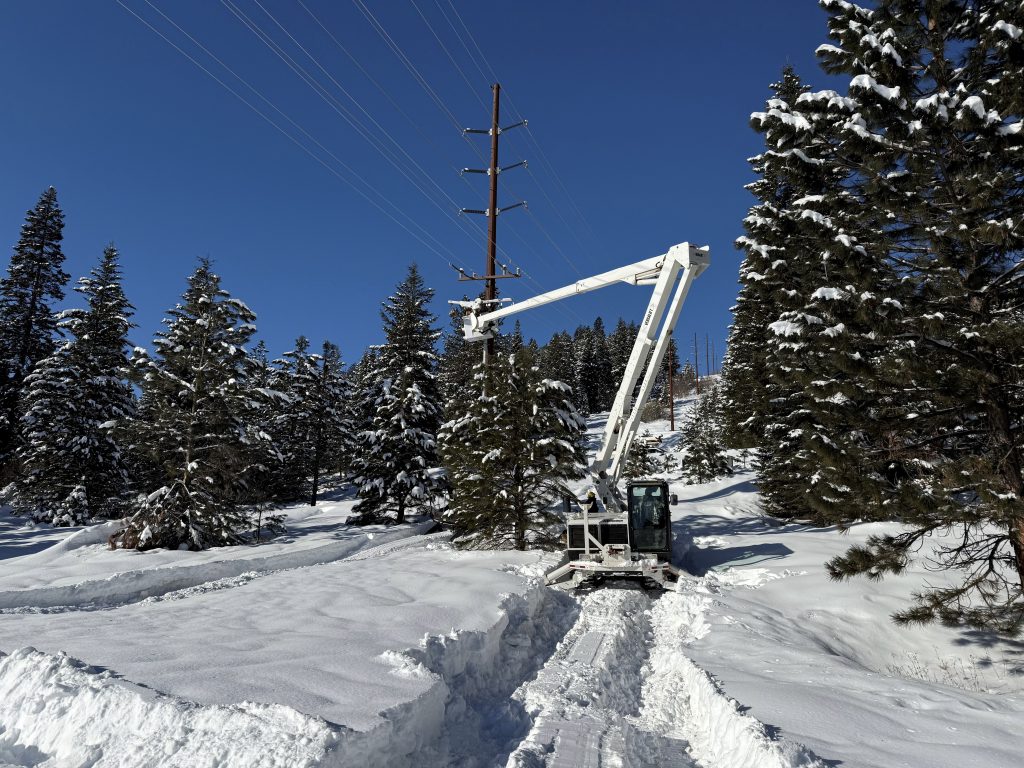
The linemen all stress how dangerous it is to approach a downed wire. “Snow is a good insulator,” Loper explains. “So when a line hits the ground, it’s very possible that it could still be energized. And then you have people that are late for work… and they get out of their car and try to move that line… It’s surprising more people don’t get killed doing that. The risk is absolute death,” says Loper.
If you see a downed power line—keep your distance. “Stay as far away as possible, at least 100 feet. And never use any sort of object to try and move or prop up a downed line,” says Jason Fouria, Area Manager and former Lineman.
The crew describes something called step potential, where voltage differences in the ground can send current up one leg and down the other, through your heart.
“The closer you get to it, you can start getting shocked. The earth, different soil can be conductive,” says Van Patten. “Just because the line’s not arcing and sparking doesn’t mean that it’s dead.”
Frostbite and the Long Shift
Beyond the electrical hazards, winter itself poses serious risks. “They are subjected to extreme conditions for long periods of time. Frostbite is a concern, hypothermia is a concern. Just being exposed for a long period of time can be hazardous,” says Fouria.
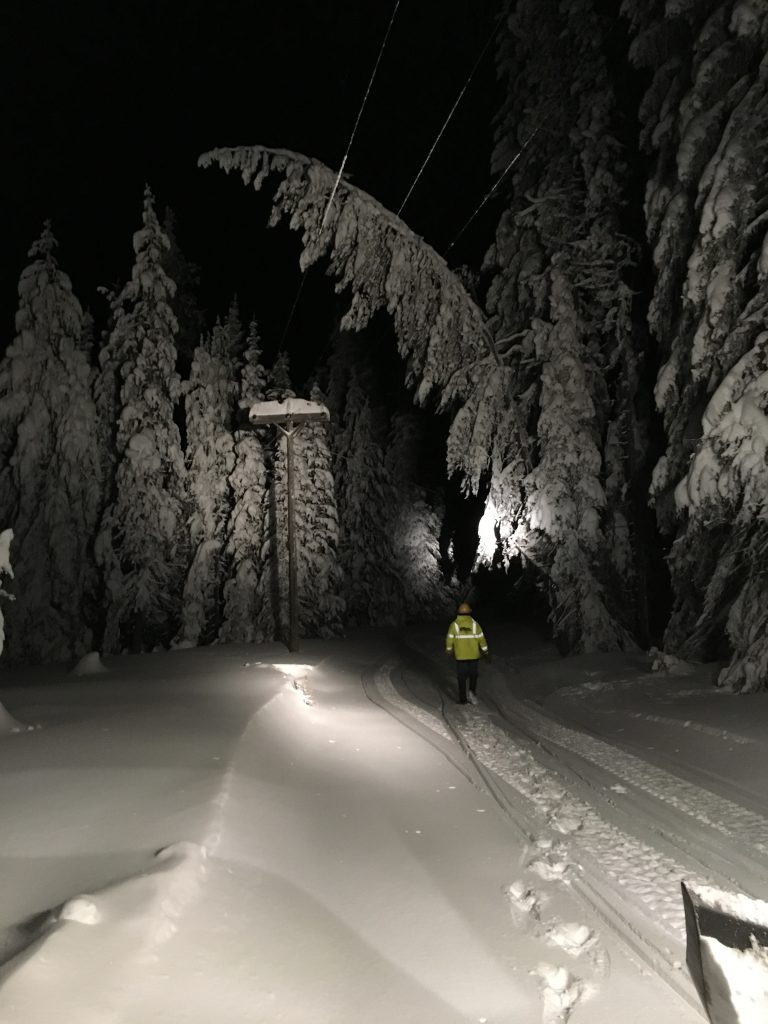
“Any one of us can be out on call working 24 hours straight before taking our safety rest,” says Justin Swainston, a Lineman of 20 years.
“It is a dangerous job, but safety is paramount. It’s a part of our company culture and it’s applied to our every day,” says Fouria.
Warmth and Gratitude
Still, these linemen find great satisfaction and camaraderie in their work. Their endless jokes and teasing reveal a tight-knit bond formed by years in the trenches together.
“I like the challenges and how every job is a little different,” says Newman, “You have to think outside of the box on a lot of these jobs. I enjoy that, and working with all these guys. There’s definitely a brotherhood among the trade.”
Sometimes, gratitude comes from the people they serve. “Not that we seek it out, but when you’ve been out there for hours in the cold doing a restoration and you get people that say ‘Thank you for getting my power back,’ that’s gratifying. It’s a good feeling that you’re helping people out,” says Swainston.
As for me, I’ll be thinking of the guys on the other end of the line when I switch on the lights. And the next time I’m snowshoeing on a cold day, I’ll appreciate returning home to the hum of my electric heater, just a little bit more.