




The Payette Lakes Antique and Classic Boat Society Turns 20
By McKenzie Kraemer
Something is moving across Payette Lake that harkens back to the earlier days on the lake, nostalgia in tow.
The lines are too clean. The wood too warm, too amber in the morning light. And the sound. Nothing else quite sounds like that. “It has no mufflers on it,” says one of the club’s longtime members, laughing. “It sounds like a Harley on water. People literally come out of the woodwork to see what the noise is all about.”
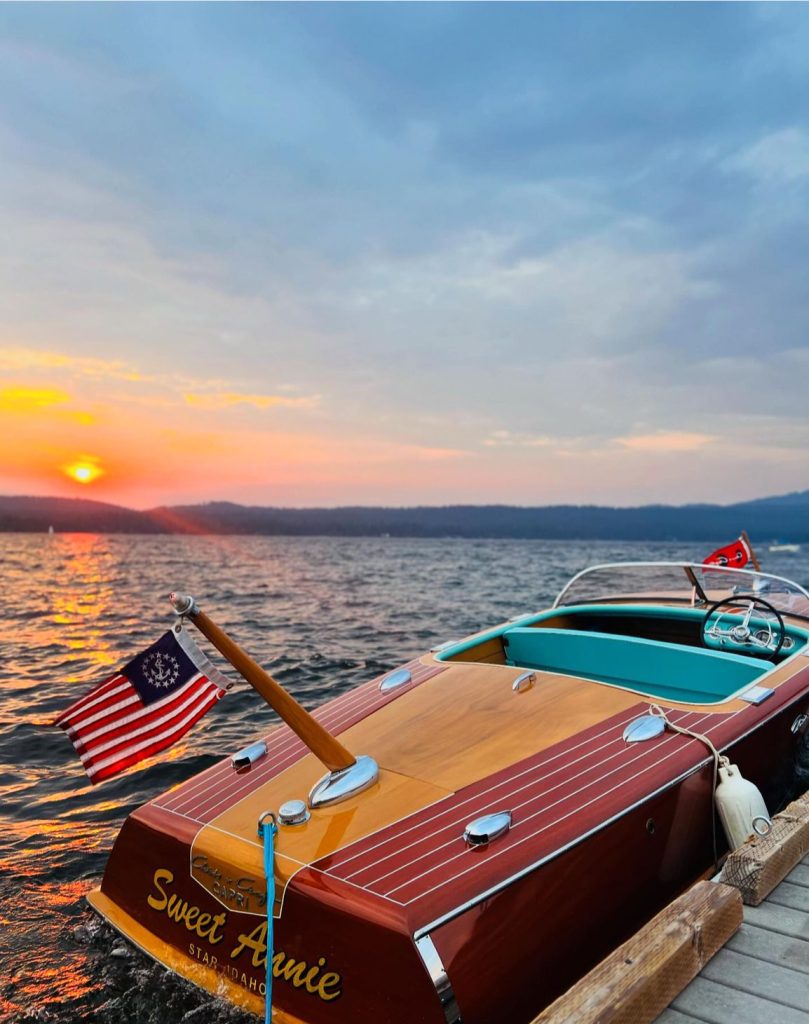
He’s describing his 1947 Chris Craft Sportsman, a 22-foot utility with white-painted sides and a Chevy 350 under the hood. It boasts an eight-person capacity, enough presence on the water that he jokingly calls it “a cocktail barge.” But before it hit the water, he and a friend spent ten months taking it completely apart and putting it back together, working it to the standard of fine furniture, knowing every small imperfection because they were nose-to-wood with it for most of a year.
“You are very much in touch with it,” he says. “You’re sanding and sanding endlessly, reapplying, putting wood together so there are no cracks. And then you put it in the water and start the engine and people just… stop.”
This is what the Payette Lakes Chapter of the Antique and Classic Boat Society does to people. It stops them.
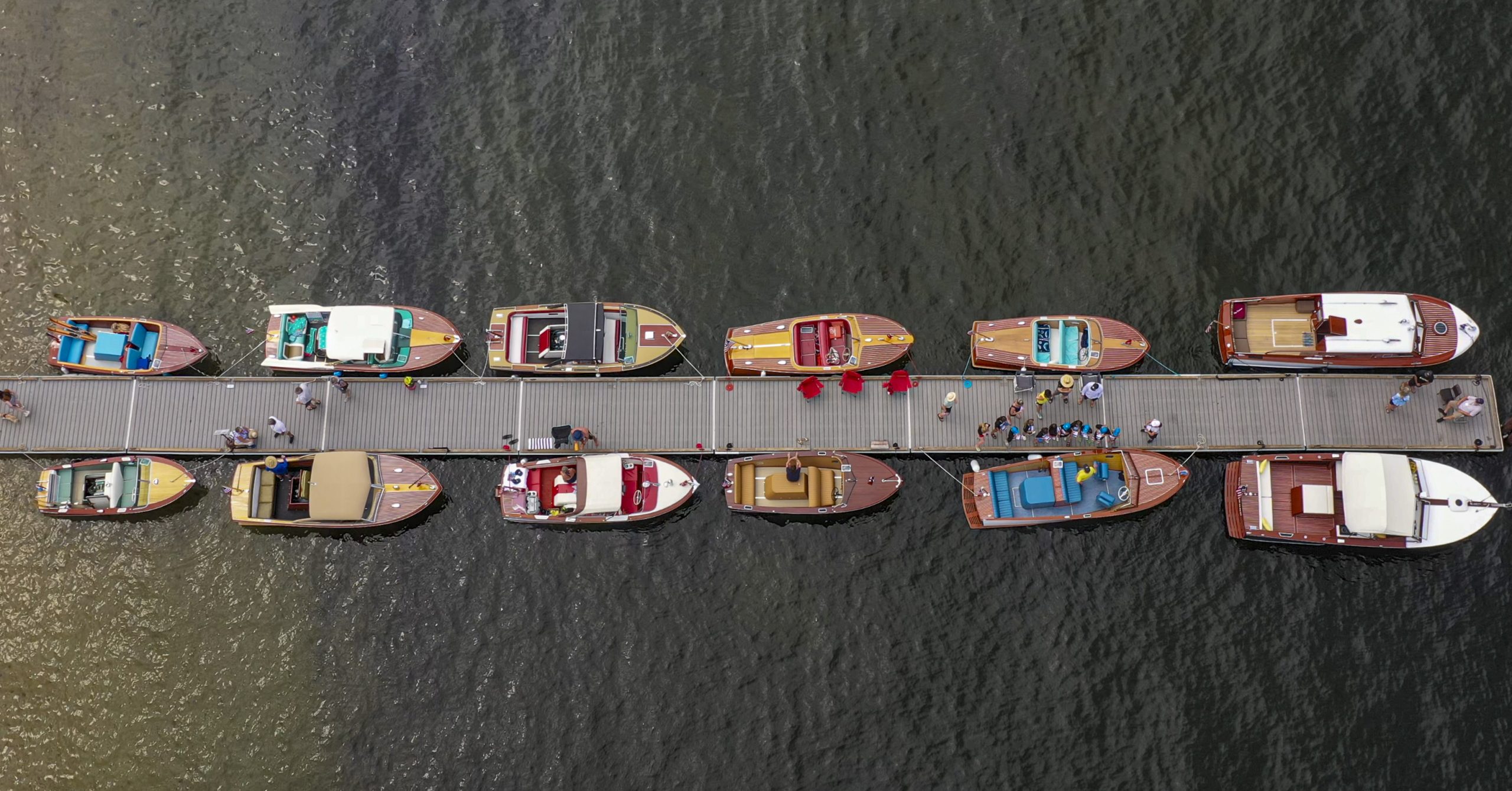
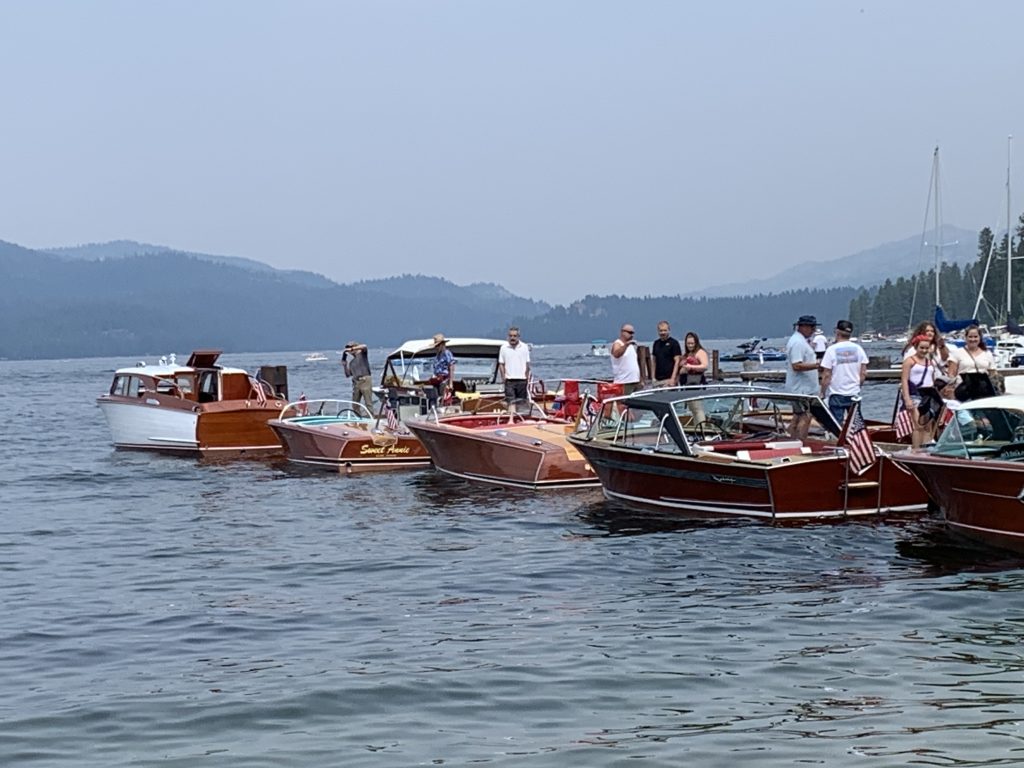
The chapter turns 20 this year. Two decades of boat shows, lake runs, morning coffee on the water at North Beach, and the quiet, patient work of keeping something alive that could very easily have been lost. It started in 2005 with 26 founding members who wanted to share what they knew: how to find these boats, how to restore them, how to care for them. Today, the chapter has around 40 members, and every August, they bring their boats downtown to the Art Roberts and Legacy Park docks and let the public have an up-close and personal look at these historic boats.
The show is free and open to anyone who wanders over. No formal judges, no intimidating scoring system. The captains do the evaluating themselves, and the philosophy is deliberately inclusive: find the beauty in every vessel on the water. This year’s show adds something especially rare: a 1943 Grumman Widgeon flying boat, docked alongside the wooden runabouts.
The boats at a show like this range from pre-World War II “runabouts,” low and fast with the engine covered by hatches and two fixed seats and not a square inch of walking room, to post-war “utilities” built for families who wanted to move around. Wooden boat production largely ended when fiberglass took over in the 1960s, which means the boats in the club are 60 to 100 years old. The ones built before the war are rarer still. Production was halted in 1942 when the federal government commandeered the manufacturers to build military vessels. When the war ended, the engineering had changed, and so had what families wanted from a boat.
Each surviving boat has a history that spans states, decades, and sometimes, even continents. The Chris Craft Sportsman was originally shipped from Michigan to Ames, Iowa, and eventually wound up at a farmhouse outside Riggins before its current owner found it. Nobody knows much about the years in between. The trail is traceable forward, though. Chris Craft donated all of their manufacturing records to a museum in Clayton, New York, and for a nominal fee, any owner can request a replica of their boat’s “hull card,” the original shipping document listing the engine serial number, interior color, standard features, everything. It is, essentially, a boat’s birth certificate.
“That’s what they use for authentication,” the member explains. “The judges know exactly what it was supposed to look like when it rolled off the factory floor.”
The hull card is also how you trace a boat’s life. Take the Everan Zephyr: a 1940 Chris Craft Custom Runabout, Hull #48739, 19 feet, barrel back configuration, tan pigskin cockpit, Chris Craft K engine. She left the factory on May 16, 1940, bound for Geneseo, New York, where she spent a decade or so in the Finger Lakes. By the early 1980s, she was hanging from the ceiling of a marina in Sodus Point, New York, where a man named William Young had first spotted her as a 13-year-old and never forgotten her. He eventually bought her, restored her by hand over several years, and sold her in 1984 to a Rochester attorney named Phillip Spahn, who used her one summer on Conesus Lake before engine trouble sidelined her. She then sat outside Spahn’s home for years, weathering to grey, before making her way to San Diego.
In 2012, she came to McCall. A local club member acquired her and brought her to Don Hardy at McCall Boatworks, and over the next two years, they put her back together completely. In 2014, the Everan Zephyr was shown at the ACBS Lake Tahoe Concours d’Elegance, the year the barrel back was the featured marque. She won Best Barrel Back, Best Professional Restorer for McCall Boatworks, and the Jordy Carlton Overall Best of Show. That show boasted the largest collection of barrel backs assembled since Chris Craft ended the production run in 1942, so a best of show was quite the feat.
She now lives in St. Petersburg, Florida, under the name Illustrious. The hull card and the registry at the Antique Boat Museum tell the whole, delightful story.
It’s that history, that record-keeping and honoring of a boat’s legacy, that makes wooden boat ownership feel like stewardship, not possession.
“I look at it as being a custodian,” he says. “Somebody’s going to use it after me. We took a piece of history and restored it to its beauty and its functionality for people to enjoy. With a fiberglass boat, I don’t think it would manifest itself the same way.”
That custodial instinct is part of why the club exists, and why it matters that it’s turning 20. The people who’ve been caring for these boats for the past two decades are starting to age into the question of what comes next. The boats will outlast their owners. The question is whether the knowledge will too.
The club is the perfect place to start for anyone exploring the idea of purchasing a wooden boat and joining this community of stewards. But before committing, there are three questions every prospective owner should sit with: What kind of problems do you want to have? What body of water will you be on? And is this boat actually the right size for it? “You’d be surprised,” he says, “how many people don’t think about that last one until they’re already out on the water in the wrong boat.”
This is where the community of members is so unique. Every owner has a story about how they found theirs, what it cost them to bring it back, and what surprised them. “It’s a community of knowledge and experience,” he says. “Success and failures both. People can put that to use on their own journey.”
While the pride of restoring one of these historic beauties is a big draw, that isn’t always the best part. For our boat owner, his favorite part is the kids.
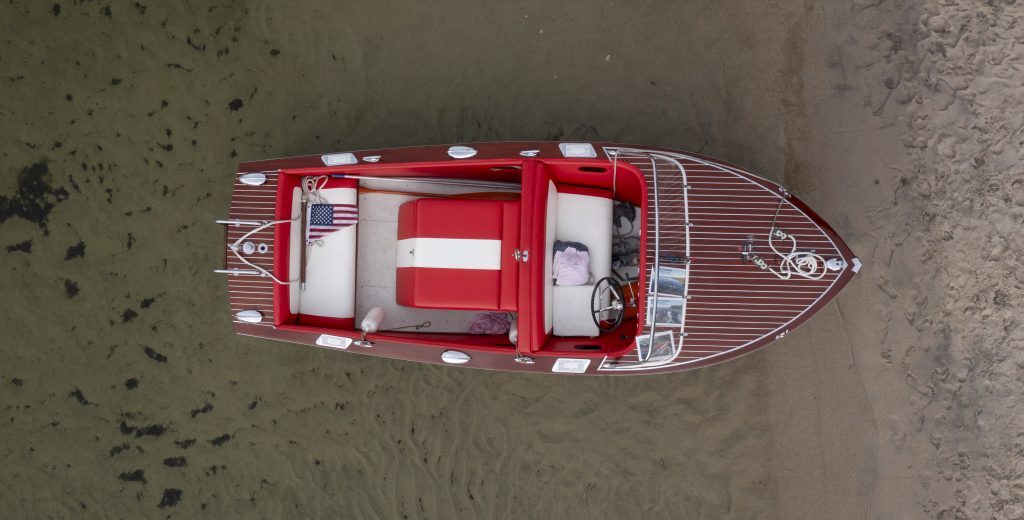
He had captain’s chairs installed and a bolster, so a child can sit up tall enough to put both hands on the wheel and actually steer. He’s done it with the neighbors’ kids. He’s done it with friends from out of town. He’s looking forward to the day he can do it with his grandson.
“I love to see the look on their face,” he says. “It’s very empowering.”
And that’s where the tradition stays alive. Sparking that joy you can only feel on a 1947 wooden boat, cruising the lake on a summer evening, and a community of people on Payette Lake who believe that some things are worth the work of keeping alive.
The Payette Lakes Antique and Classic Boat Show runs July 31- August 2, 2026, at Art Roberts Park and Legacy Park docks in downtown McCall. Free and open to the public. For more information or to learn about the club, visit payetteclassicboats.net.