


By McKenzie Kraemer
The barn was built in 1912. Two years later, the railroad came to Long Valley.
The railroad didn’t come to Roseberry, though, and that was the whole problem. The tracks went a mile and a half west, through a wheat field and what would become Donnelly. As a result, Roseberry, which had been the largest town in the valley, watched its bank, the church, and most of its businesses follow the rails out of town. By 1916, it was a ghost.
But the spirit of Roseberry stayed.
For nearly a century, Gus Lehti’s barn stood south of Deinhart Road off Highway 55, in the Finnish homestead corridor that once defined the upper valley. It is all mortise-and-tenon joints, 36-foot lodgepole pine beams milled in a single piece, and a cupola on top. It is one of only two barns in Long Valley built that way, and its construction outlasted most of the nearby town it was born alongside (and then a few generations after that).
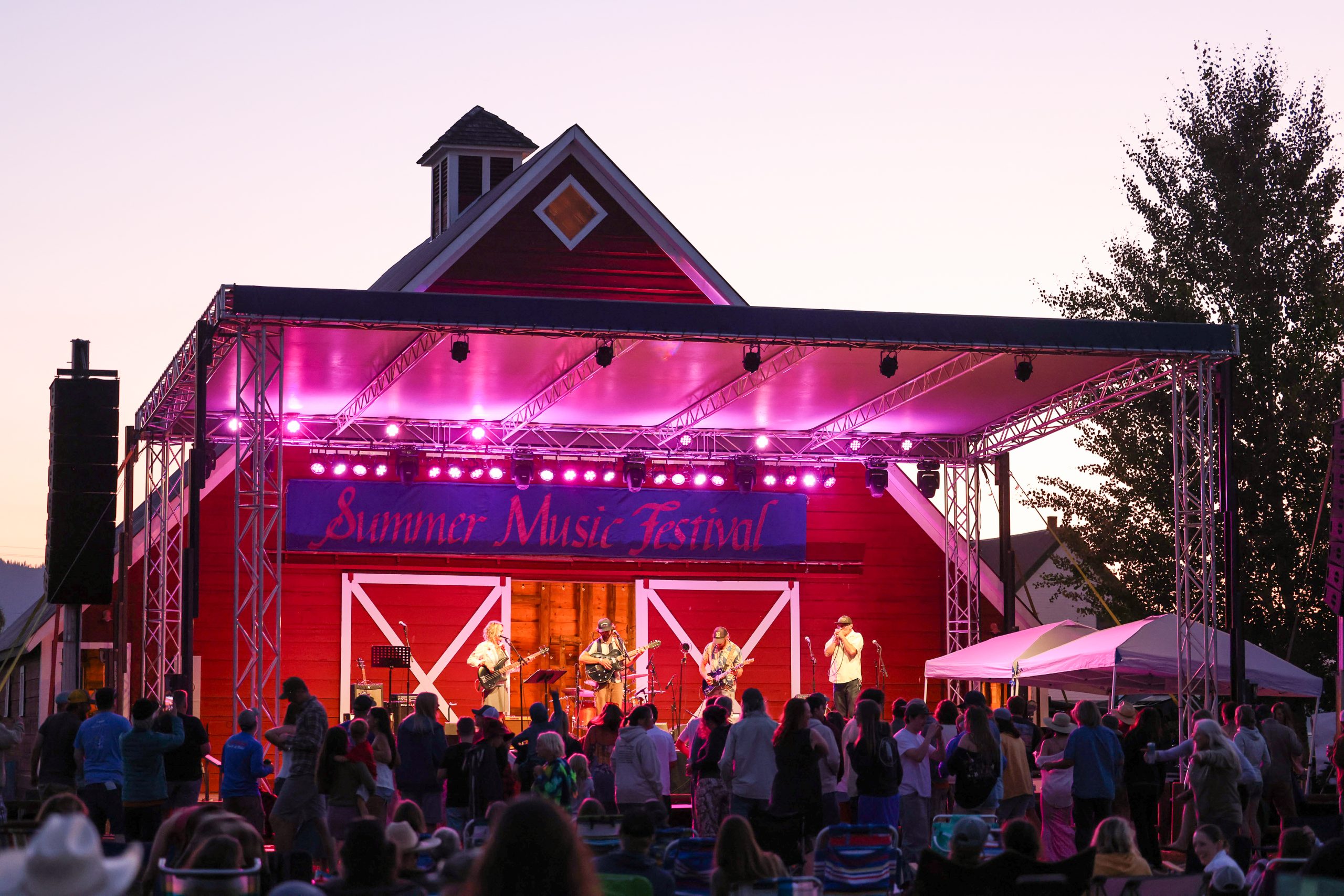
In 2008, Ellen Sackerman donated the barn to the Long Valley Preservation Society. In May of 2009, volunteers disassembled it, moved it piece by piece to the Historic Roseberry townsite east of Donnelly, and put it back together. When volunteers rebuilt it at Roseberry, they added nails for structural stability but kept the original pegs in place as a nod to the craftsmanship that built it. Once the barn was in place, come July, the Summer Music Festival at Roseberry rolled in for the first time with a proper stage underneath it.
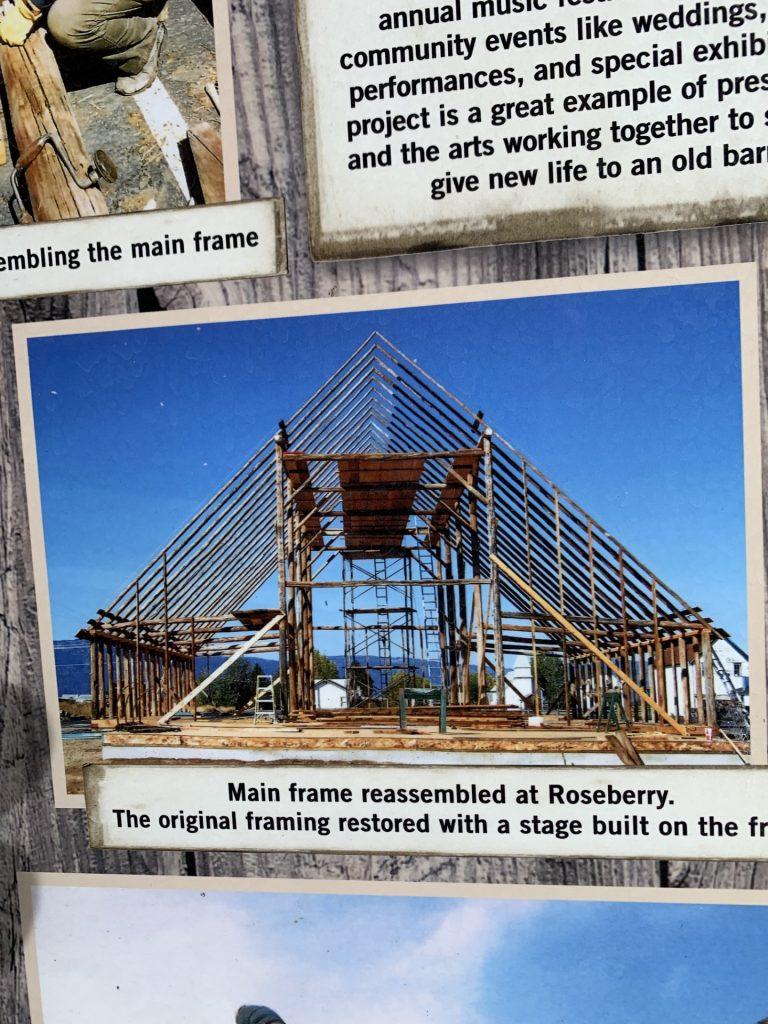
That year, the barn found its people and the festival found its home.
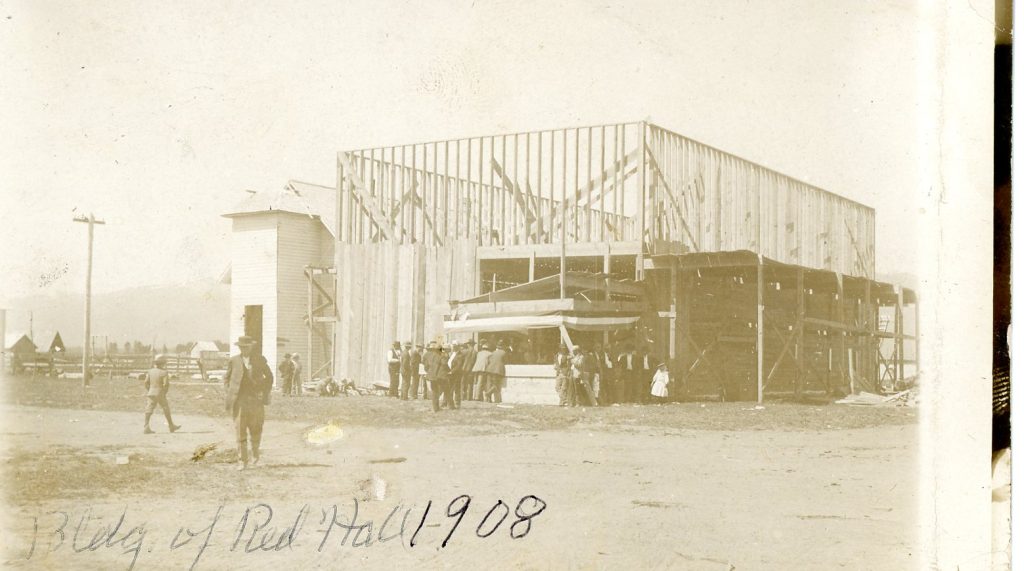
But Roseberry knew how to gather long before the barn arrived. Before the railroad decision emptied the town, there was a building at the center of it all that locals simply called the “red hall.” It stood at the southwest corner of Farm to Market and Roseberry Road, a two-story structure with a dry goods store on the ground floor and a dance hall above. The school used it for basketball games and plays. Neighbors came for dances. “Anything that went on in Roseberry was in this big hall,” recalled Marie Spink, who taught there in 1927 and 1928. Stories have it that the whole building swayed when the dancing got going. It was eventually torn down and the lumber salvaged, and by 1980, only its foundation stones were left.
The Barn at Roseberry is the red hall’s heir. Same bones, same purpose.
Frank Eld spent 40 years rescuing buildings and moving them to Roseberry. He summed up what drove the whole enterprise: “A lot of kids today don’t know what their family names mean or where their families came from. I’m trying to create roots.”
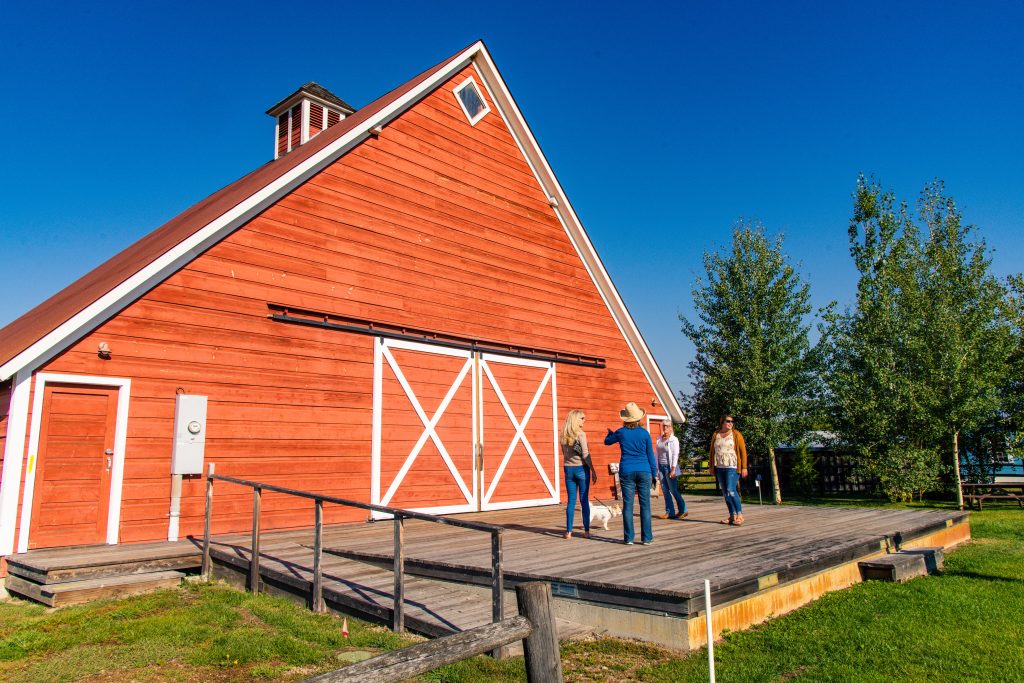
The barn fits that. Gus Lehti built it with pegs and patience in 1912, two years before a railroad route would quietly sign Roseberry’s death warrant. More than a century later, those 36-foot beams are holding up a stage where people come to hear music in what used to be a ghost town.
The red hall ran its course. The railroad went to Donnelly. The barn spent nearly a century in its original location near McCall, and when it finally made it to Roseberry in 2009, it was like it had always belonged there.
The Summer Music Festival
The Summer Music Festival has its own unlikely origin story, one that starts not at Roseberry but in a chance meeting between Dan Halkyard, who managed the Alpine Playhouse, and Pat Harren, a local musician, sometime in the mid-1970s. McCall in those years had drawn a loose, colorful community of artists and musicians. They called themselves the Music Circus. The nicknames were awesome: Mr. Crow, Jazmo, Pretty Peggy, Beeboo, TeePee Nancy, Sweet Sue, Big Bear.
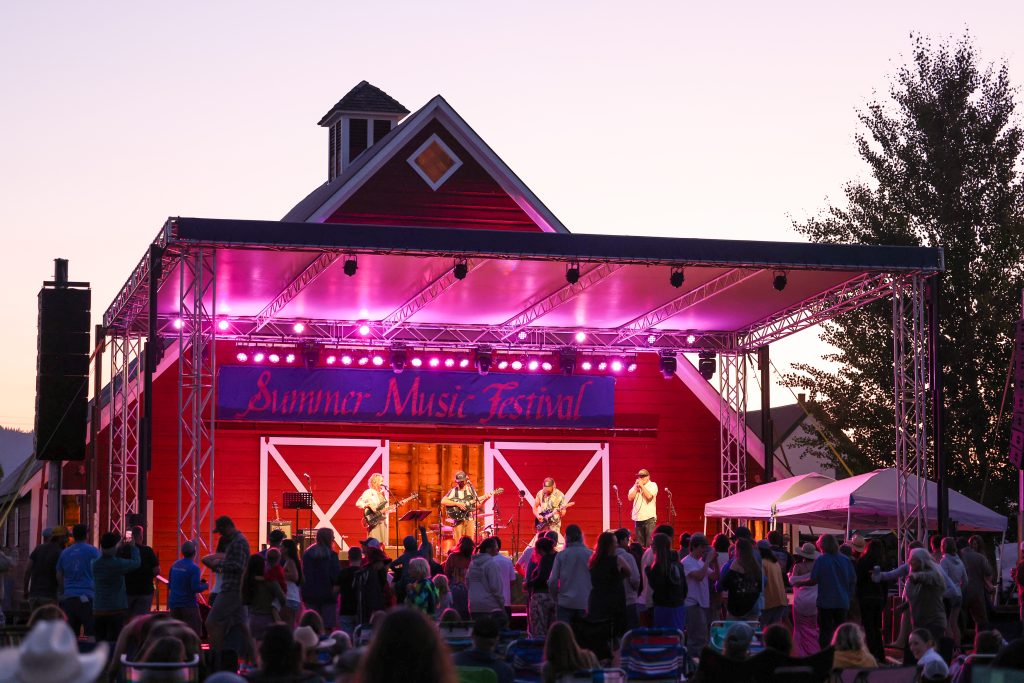
The first festival was small, scrappy, and completely itself. Local artist Kathy Golden made the poster. The Mores Creek String Band from Boise headlined. The event went by several names over the decades, including the McCall Folk Festival and a few others that didn’t stick, before landing on what it is now: the Summer Music Festival at Roseberry. The venue followed a similar wandering path, from the Alpine Playhouse to the McCall-Donnelly High School music room to the University of Idaho field campus (now MOSS), before finally arriving at the place that felt like it had been waiting all along.
More than 40 years in, the festival is produced by the McCall Folklore Society. Three nights, every July. Thursday is Locals Night, when the valley’s own musicians take the stage and the evening feels most like the Music Circus in its heyday. Friday and Saturday bring the headliners. Music starts at 6:30 p.m. each night, and the setting does things no indoor venue can replicate: the old townsite, the mountains going purple at dusk, the faint smell of lodgepole on the air. Absolute perfection.
The 2026 festival runs July 16, 17, and 18. Thursday is Locals Night featuring Glenn C. McLaughlin, Beaver Drop, Open Range, The River Ramblers, and The Bottom Line Band. Friday features Dead Winter Carpenters, Ken Pomeroy, and Matt Mitchell Music Co. Saturday brings the Neither Hour, Jackie Greene, and Reid Genauer.
If you can’t make it in July, the Long Valley Preservation Society runs the Wednesday Night Concert Series throughout the summer, free shows at 6:30 p.m. at Roseberry from June 24 through September 2.
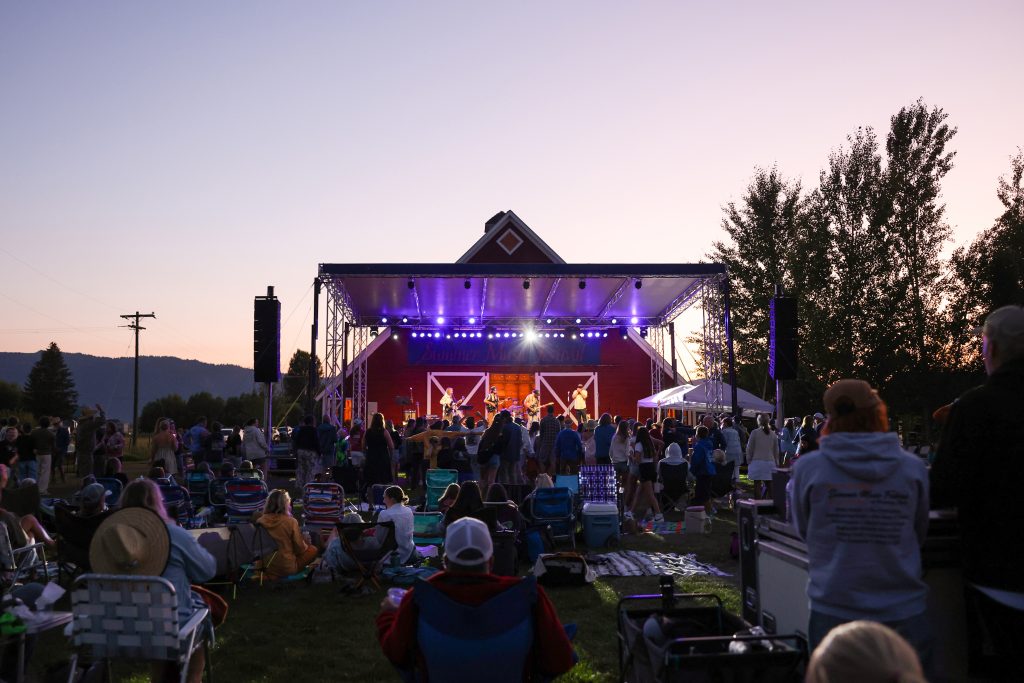
The Folklore Society puts it simply: a relatively small event like this one can proudly reflect the combined efforts of a big-hearted community. Marie Spink would have recognized that. So would Gus Lehti. The red hall used to be the place where that happened. Now it’s the barn.
It took the festival four decades and four venues to find its home. Turns out, the barn had been the tent the Music Circus sought from the very beginning.